IP67 Rating and Anti-Corrosion: Ensuring BLDC Motor Survival in Agricultural UAVs
Published on July 25, 2026
Agricultural spraying drones operate in some of the most aggressive working environments for electric motors.
Exposure to airborne pesticides, liquid fertilizers, high humidity, and dust creates constant risk of motor short circuits and mechanical corrosion.
To maintain reliable flight performance and prevent premature motor failure, drone manufacturers must focus on IP67 ingress protection and anti-corrosion structural engineering.
Environmental Hazards in Spraying Operations
1. Chemical Corrosion from Pesticides and Fertilizers
Liquid spray mist penetrates unsealed motor housings, eroding copper windings, stators, and internal bearings. Over time, chemical buildup leads to phase shorting and structural failure.
2. Dust and Airborne Debris
Dust and soil particles mixed with agricultural chemicals create abrasive pastes that wear out motor bearings and restrict passive cooling airflow.
Core Protective Engineering Solutions
IP67 Ingress Protection
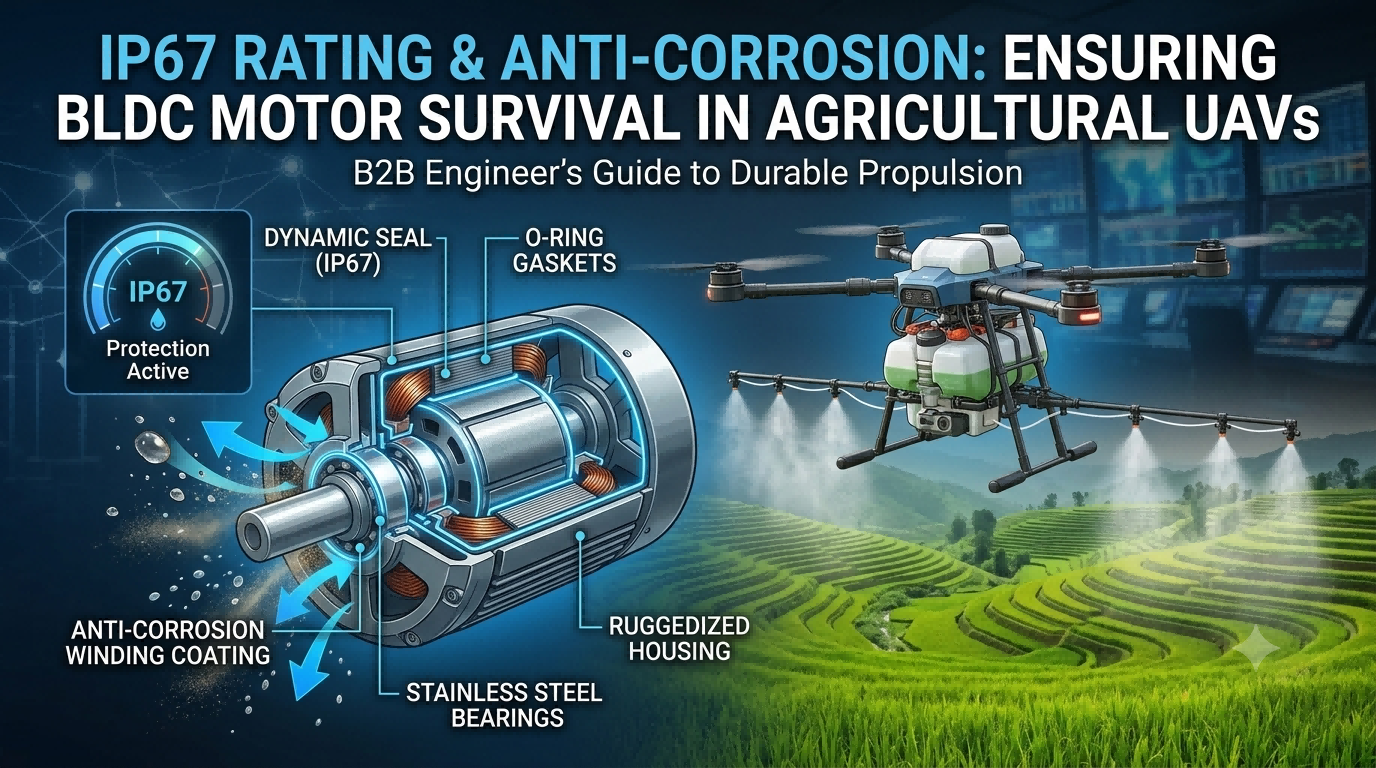
An IP67 rating ensures the motor is completely dust-tight and protected against temporary water immersion. Sealed housing joints, O-rings, and rubber shaft seals prevent liquid chemicals from entering internal electronics during flight and pressure wash-downs.
Conformal Winding Coating
Applying high-temperature conformal coatings or epoxy encapsulation directly over stator windings protects copper wire from direct contact with corrosive airborne agents and moisture.
Corrosion-Resistant Bearings and Materials
Using stainless steel bearings, anodized aluminum housings, and coated rotor magnets prevents surface oxidation and extends operational lifespan in high-humidity fields.
Summary
Equipping agricultural UAVs with IP67 rated, corrosion-resistant BLDC motors reduces maintenance downtime, prevents sudden power loss during flight, and ensures reliable performance across demanding spraying seasons.