Magnetic Drive vs. Direct Shaft Seal in Subsea ROV Thrusters: Reliability Analysis
Published on August 13, 2026
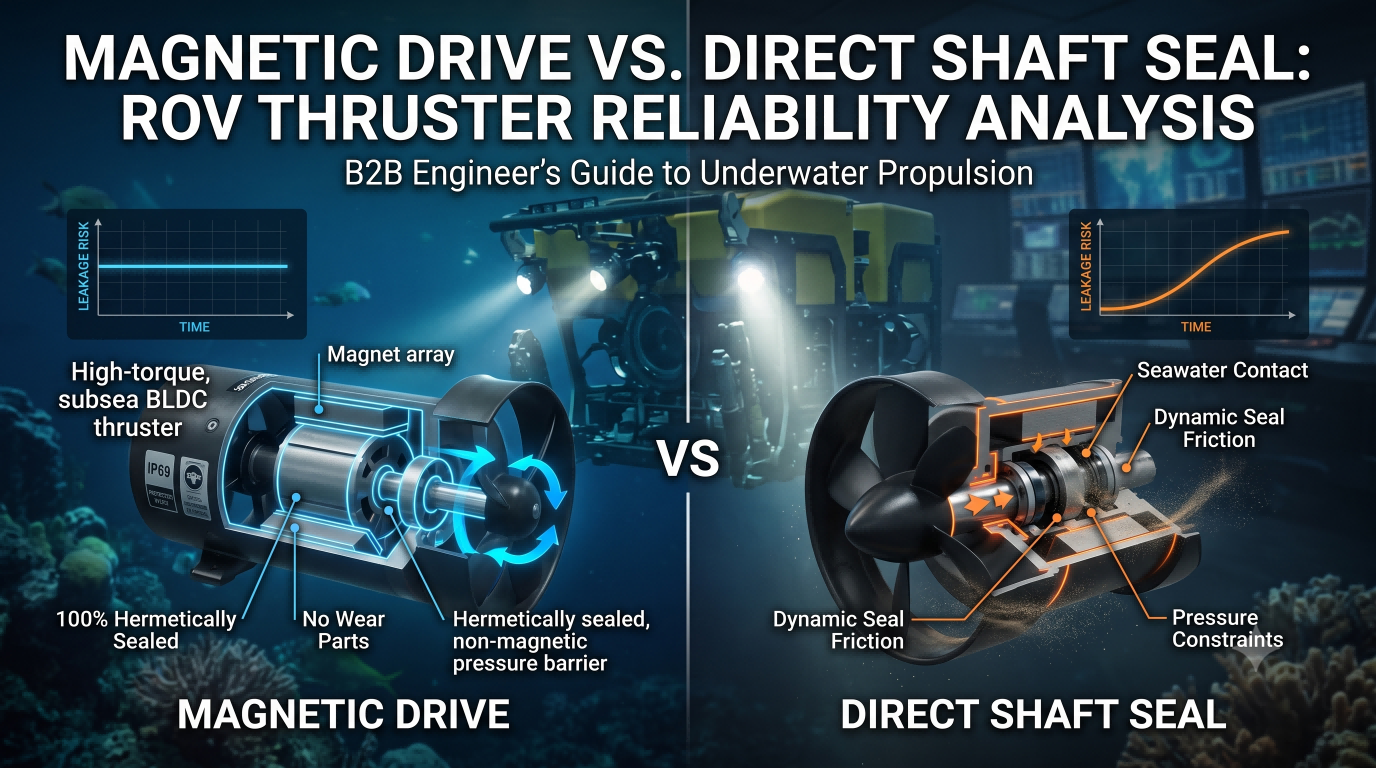
Subsea Remotely Operated Vehicles (ROVs) and underwater robotics operate under severe pressure, high salinity, and abrasive sandy conditions. The propulsion system is critical to mission success. A primary failure point in conventional subsea thrusters is seawater ingress through mechanical seals.
Selecting between Direct Shaft Seals and Magnetic Drive (Magnetic Coupling) technology directly impacts thruster lifespan, maintenance intervals, and operating depth capabilities.
Direct Shaft Seals: Mechanism and Limitations
Direct shaft seals rely on dynamic mechanical face seals or lip seals to isolate internal motor electronics from surrounding seawater.
1. Friction and Thermal Wear
Dynamic seals maintain continuous contact with the rotating shaft. Over time, high rotational speeds create localized friction heat, accelerating rubber and seal face degradation.
2. Depth and Pressure Constraints
As operating depth increases, hydrostatic water pressure forces seawater against the seal barrier. Minor seal wear or fine sand particle intrusion can lead to immediate water ingress and catastrophic electrical shorting.
## Magnetic Drive: Hermetic Sealing Advantage
Magnetic drive thrusters transmit rotational torque across a solid, non-magnetic pressure barrier using permanent magnet arrays.
1. Reduced Leakage Risk
Because there is no physical shaft penetrating the motor casing, the motor housing can be designed as a sealed system. Seawater exposure to internal windings or electronics is prevented by the magnetic coupling barrier.
2. Lower Maintenance and Longer Lifespan
Eliminating dynamic mechanical seals removes contact friction, reducing wearing parts and extending thruster operating hours between service intervals.
Comparative Summary
- Sealing Method: Direct Shaft Seal relies on dynamic contact; Magnetic Drive uses static hermetic isolation.
- Depth Performance: Direct Shaft Seal is limited by mechanical wear and pressure; Magnetic Drive scales effectively to extreme subsea depths.
- Maintenance: Direct Shaft Seal requires regular seal replacements; Magnetic Drive requires minimal maintenance.
Conclusion
For deep-water subsea ROVs and critical underwater operations where downtime is costly, magnetic drive thrusters can offer reduced leakage risk and potentially lower long-term maintenance costs.