Moisture-Resistant BLDC Motor Design for Commercial Refrigeration & Cold Chain
Published on August 26, 2026
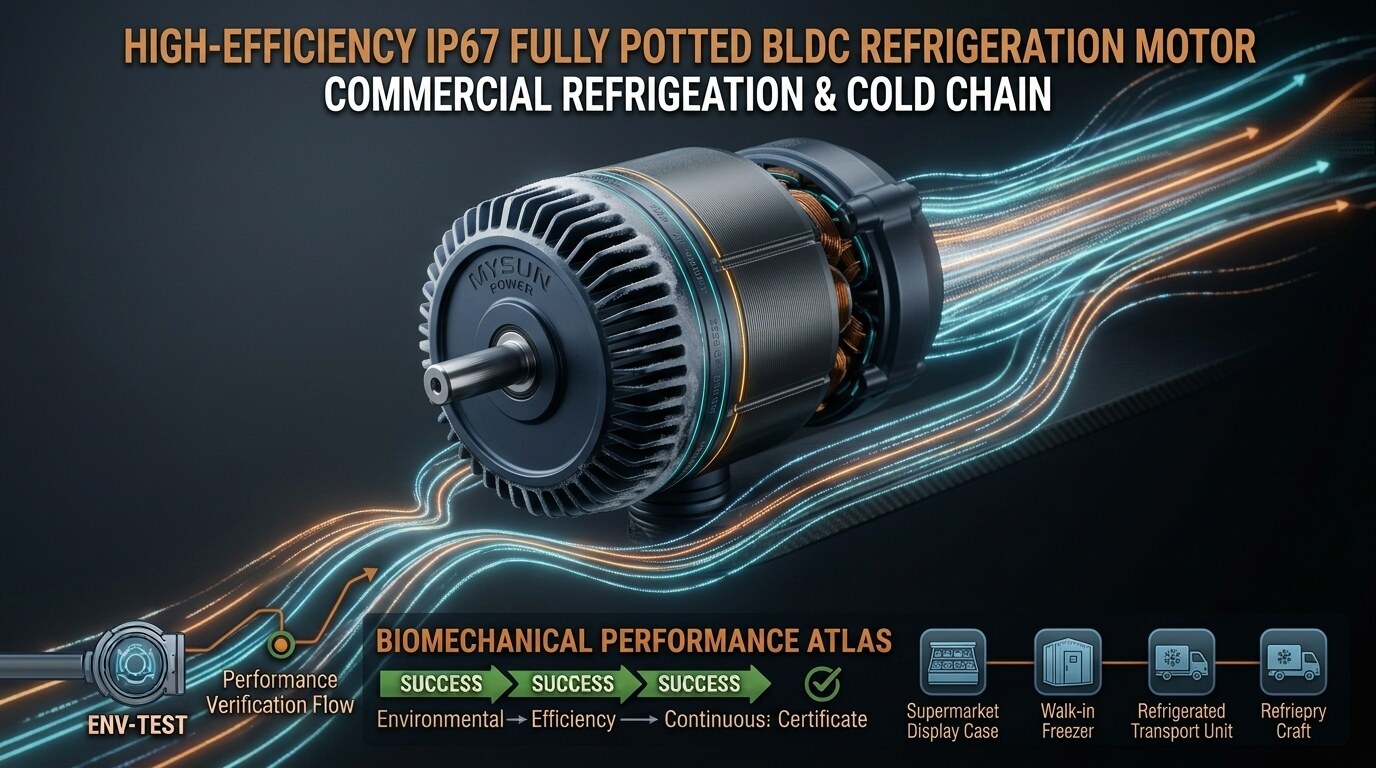
Engineering Challenges in Moisture-Resistant Motor Design
Commercial refrigeration and cold-chain applications present unique challenges for BLDC motors. Operating in environments with high humidity, temperature fluctuations, and potential condensation requires careful consideration of moisture protection strategies.
Key Design Considerations
Sealing and Encapsulation: Moisture protection approaches may include potting compounds, conformal coatings, or sealed enclosures. Specific protection levels must be confirmed according to the equipment environment and validated for the final motor design.
Insulation Systems: Winding insulation materials and techniques must be selected based on operating temperature range and humidity exposure. Insulation class requirements should be verified for the specific application.
Thermal Management: Heat dissipation strategies must account for both motor-generated heat and external temperature conditions. Thermal design should be validated under actual operating conditions.
Material Selection: Component materials must resist corrosion and degradation in humid environments. Material compatibility should be confirmed for the specific operating conditions.
Application-Specific Requirements
Moisture protection, encapsulation, insulation, and sealing requirements must be confirmed according to the equipment environment and validated for the final motor design. Voltage, speed, torque, and installation requirements should be specified based on the actual equipment configuration.
Discuss Your Refrigeration Motor Requirements
If you are developing commercial refrigeration or cold-chain equipment, please submit your required specifications (Operating Voltage, Target Speed, Max Outer Diameter, and application environment). Our engineering team will review your requirements and discuss the technical approach.