Thermal Management in Heavy-Duty HVAC Motors: Preventing Breakdown in Extreme Environments
Published on July 21, 2026
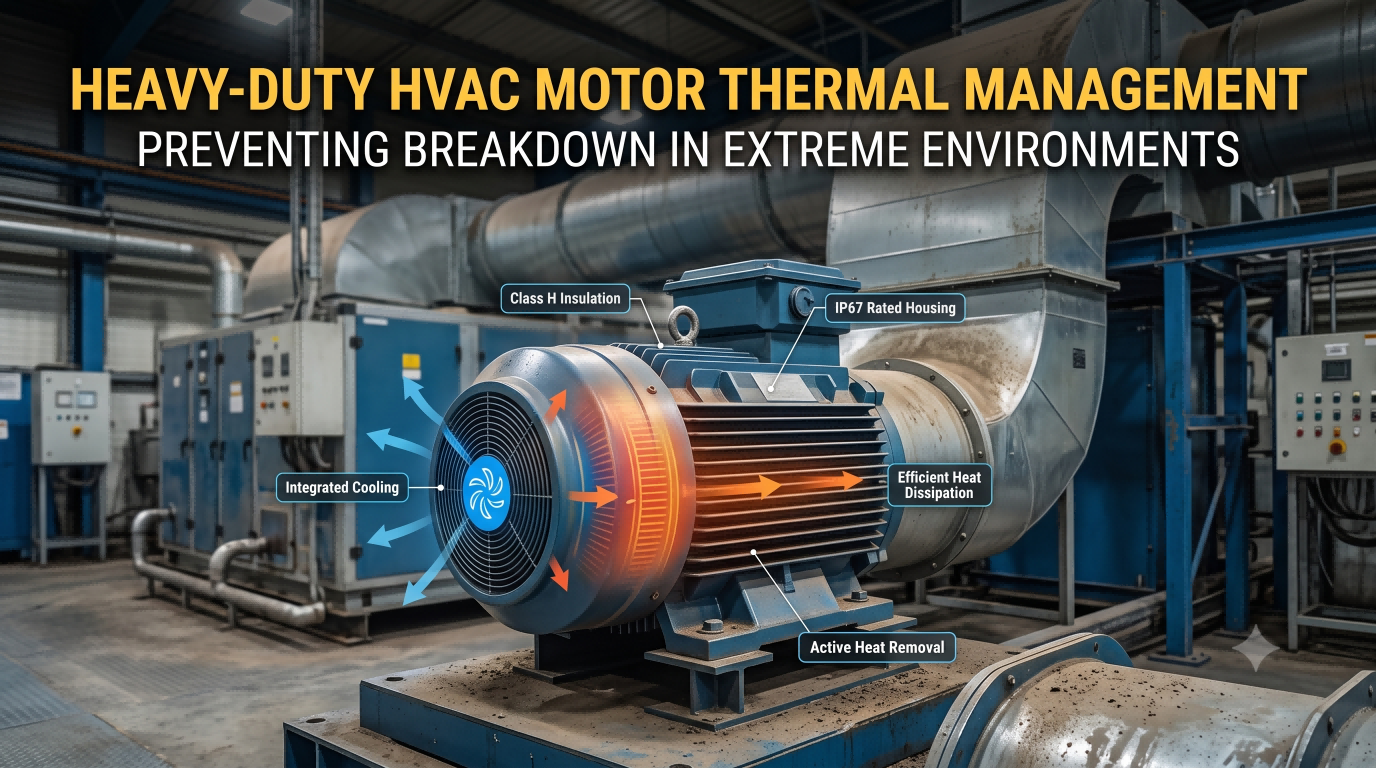
Industrial HVAC systems operating in harsh manufacturing plants, high-humidity processing facilities, and intense ambient temperatures face a common challenge: heat overload. Overheating is a leading cause of electric motor insulation failure and costly operational downtime.
Understanding the causes of motor overheating and implementing effective thermal management strategies helps engineers ensure reliable, continuous performance.
Primary Causes of Motor Overheating
1. High Ambient Temperatures
Motors working in unventilated areas or near heat-generating equipment struggle to dissipate internal heat, causing winding temperatures to exceed safe operating limits.
2. Excessive Duty Cycles and Overloading
Running motors continuously under heavy load increases current draw and generates resistive heat within stator windings and rotor cores.
3. Dust and Moisture Accumulation
Debris buildup on cooling fins restricts airflow, acting as an insulating layer that traps heat inside the motor housing.
Key Strategies for Thermal Protection
Proper Material Selection
Choosing motors with Class H or Class F insulation allows windings to withstand high internal temperatures without insulation breakdown.
Optimized Housing and Cooling Design
Heavy-duty motors designed with aluminum or cast iron external cooling fins maximize thermal dissipation surface area. External cooling fans or liquid cooling jackets provide stable temperature control under severe loads.
Ingress Protection (IP Ratings)
Using IP65 or IP67 sealed enclosures protects internal motor components from humidity, chemical corrosion, and abrasive dust while maintaining efficient heat transfer.
Summary
Implementing robust thermal management extends motor lifespan, lowers failure rates, and reduces unplanned maintenance in heavy-duty HVAC applications.