BMC Plastic Encapsulated BLDC Motors: Eliminating Corrosion and Acoustic Resonance in Severe HVAC Environments
Why HVAC OEMs move from stamped steel shells to BMC thermoset encapsulated BLDC motors: corrosion resistance, flame rating and lower noise.
1. The Vulnerability of Metallic Housings in Demanding HVAC Applications
In high-duty commercial heating, ventilation, and air conditioning (HVAC) systems—such as cleanroom recirculators, indoor pool natatorium dehumidifiers, coastal air handling units (AHUs), and pharmaceutical laboratories—electric motors face severe environmental stressors:
- Condensation and Chemical Vapor Ingress: Ambient temperature swings generate continuous internal condensation. In corrosive atmospheres containing chlorine, sulfur dioxide, or cleaning sanitizers, metallic casings suffer galvanic and crevice corrosion, leading to stator ground faults.
- Acoustic Amplification: Traditional stamped sheet metal and thin-walled aluminum housings act as acoustic resonators. High-frequency electromagnetic excitation (6x and 12x fundamental slot frequencies) and 8–16 kHz inverter PWM carrier harmonics radiate directly into ductwork as annoying high-pitch tonal whines.
- Stray Inverter Shaft Currents: When driven by modern Variable Frequency Drives (VFDs), capacitive coupling between winding conductors and the grounded steel stator stack can induce shaft voltages that discharge across ball bearings, causing EDM pitting and bearing fluting failure.
2. Material Science: The Architecture of Bulk Molding Compound (BMC) Encapsulation
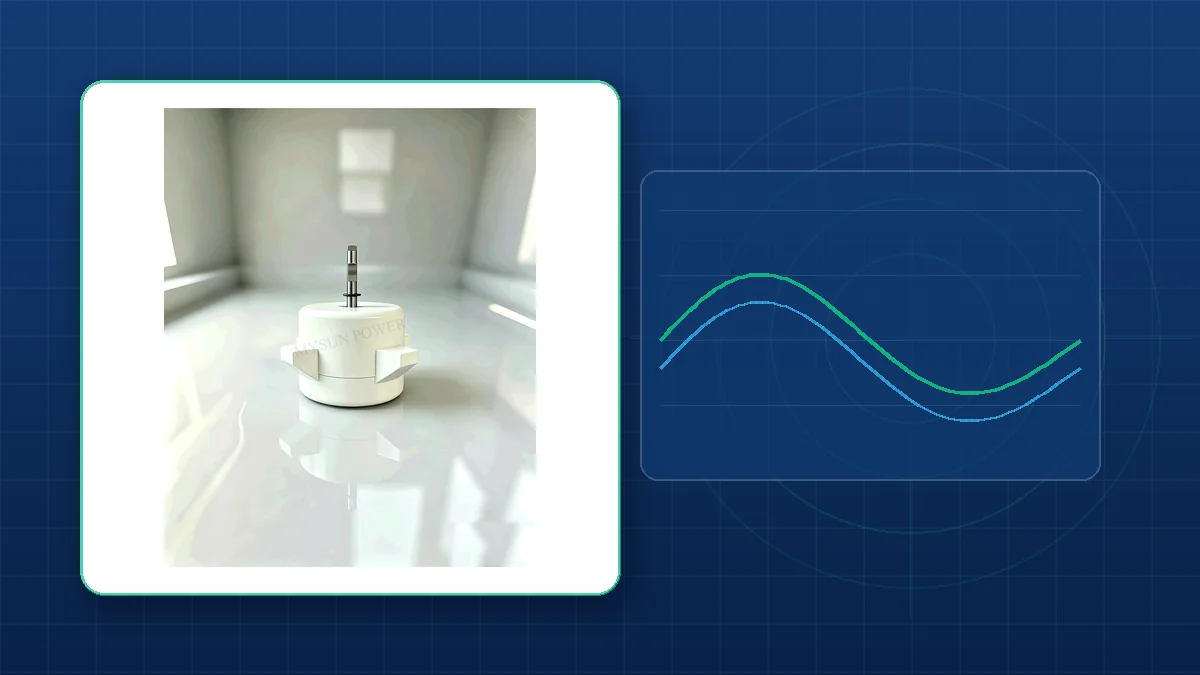
To overcome these physical limitations, Guangdong MYSUN Power Technology Co., Ltd. utilizes an advanced BMC (Bulk Molding Compound) injection compression encapsulation process. Rather than inserting the wound stator stack into a fabricated metal tube, the entire core assembly is molded inside a precision heated die with high-performance thermoset polyester composite:
Thermoset BMC Material Matrix Design Considerations:
A synergistic compound consisting of unsaturated polyester resin, 15%–20% chopped E-glass structural fibers, thermally conductive aluminum hydroxide / silica fillers, and organosilane coupling agents. Upon cross-linking at 145°C–160°C under 12–18 MPa pressure, the resin forms a non-porous, monolithic hermetic enclosure.
Key advantages of this structural design include:
- Continuous Thermal Conduction Path: With thermal conductivity reaching 0.95 ~ 1.15 W/(m·K)—nearly five times higher than stagnant air trapped in conventional motor end-bell cavities—heat from the copper windings conducts directly outward through the encapsulant, eliminating local hotspots.
- UL94-V0 Fire Retardancy: The inorganic filler matrix suppresses combustion and self-extinguishes within 10 seconds of flame removal, representing a UL94 V-0 material flammability classification on test specimens (note: UL94 V-0 is a material rating and does not by itself establish UL 2043 plenum or building-code compliance for an assembled motor or end equipment, which must be evaluated per project).
- Intrinsic Double Insulation (High Dielectric Stator Encapsulation): The thermoset shell delivers high dielectric breakdown strength (typically >20–25 kV/mm on material test specimens), isolating electrical components supporting reinforced insulation designs evaluated per application electrical safety standards.
3. Acoustic Damping Characteristics & Low-Noise Design Targets
In applications such as hospital fan coil units, luxury hotel guestroom ventilation, and residential heat recovery ventilators (HRVs), acoustic comfort is a primary competitive differentiator.
BMC possesses an internal mechanical loss factor (η ≈ 0.04 - 0.06) that is 8 to 12 times higher than steel (η ≈ 0.003) or cast aluminum (η ≈ 0.005). Mechanical vibrations generated by radial Maxwell stress waves across the air gap are dissipated internally as microscopic molecular friction rather than radiated as airborne noise.
| Engineering Metric | Traditional Steel Casing | Die-Cast Aluminum | MYSUN BMC Encapsulated |
|---|---|---|---|
| Acoustic Noise (1m distance) | 46 ~ 52 dBA (typical published range) | 43 ~ 47 dBA (typical published range) | 34 ~ 38 dBA (Test bench design value under specified test conditions) |
| Salt Spray Resistance (ASTM B117) | 96 ~ 240 hrs | 480 hrs (anodized) | > 1,500 hrs (high corrosion resistance) |
| Ingress Protection Rating | IP42 ~ IP44 | IP54 | IP55 ~ IP65 Sealing Configurations (Project Confirmed) |
| Dielectric Isolation | Basic (Requires Ground) | Basic (Requires Ground) | Reinforced / High Dielectric Encapsulation |
| Mechanical Damping Ratio (ζ) | 0.0015 | 0.0025 | High mechanical damping composite structure |
4. OEM Integration & Customization Parameters
Guangdong MYSUN Power manufactures customized plastic encapsulated BLDC and AC motors tailored to OEM equipment geometries and mechanical mounting brackets:
Shaft & Mechanical Options
- • Precision SUS304 / SUS316 stainless steel shafts for humid environments
- • Custom shaft diameters (Ø8mm, Ø10mm, Ø12mm, Ø15mm) with D-flat or threaded ends
- • Integrated integral mounting lugs directly molded into the BMC casing
Electrical & Control Flexibility
- • Direct 24V / 48V DC, 115V / 230V AC, or 310V High-Voltage BLDC drives
- • Integrated or external Field-Oriented Control (FOC) driver boards
- • 0–10V, PWM, or Modbus RTU RS485 communication protocols
5. Summary & Application Recommendations
For HVAC manufacturers developing premium commercial equipment, specifying BMC plastic encapsulated BLDC motors provides an immediate leap in product durability and perceived quality. The elimination of rust, paired with engineered acoustic dampening properties, substantially lowers warranty claims and total cost of ownership (TCO) across multi-year continuous commercial operating lifecycles.
Ready to Optimize Your Motor Performance & Lower TCO?
Guangdong MYSUN Power Technology Co., Ltd. delivers customized BLDC, EC, and high-torque geared motor solutions tailored to your thermal, mechanical, and efficiency specs. Engineering proposals in 14–30 days; prototype batches (3–5 units) and production timelines confirmed following engineering review.