Air Curtain Motor Engineering for OEMs: Continuous-Duty Thermal Margins, Wheel Balance & Mounting Selection
An OEM engineering guide to selecting and integrating single-phase air curtain motors across YDK-100-4, YDK-100-2, and YDK-220-4-L platforms: thermal margins, shaft runout, noise, and 14–30 day prototyping.
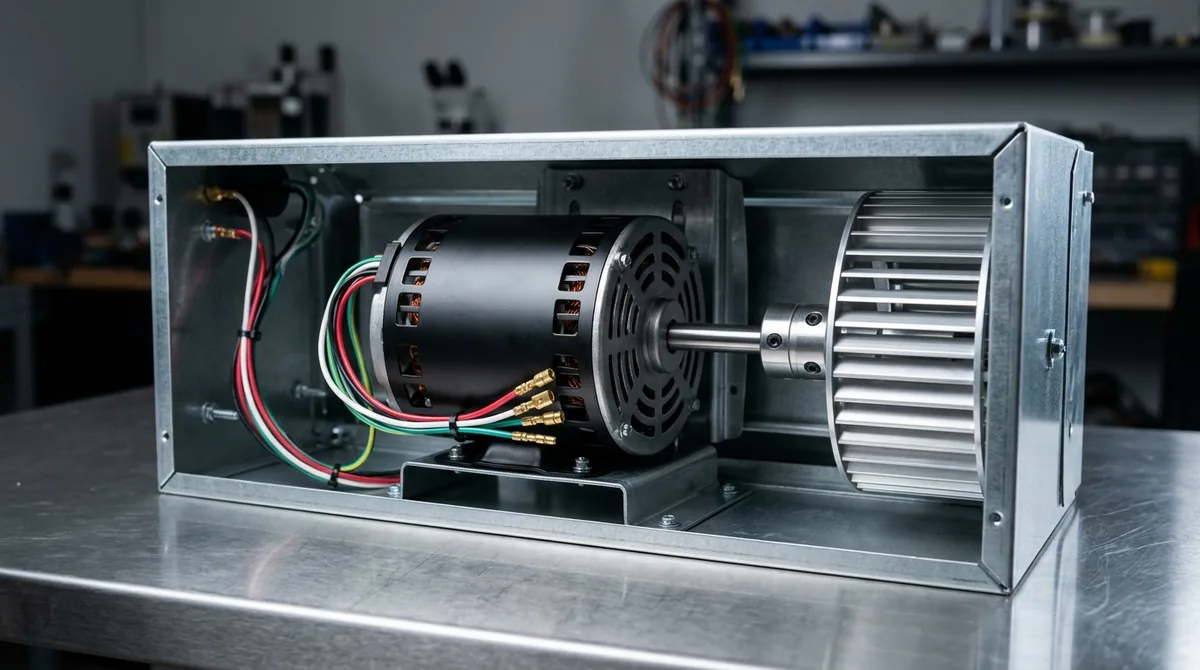
A commercial air curtain rarely fails during a 20-minute prototype air-velocity check on an open shop bench. Field failures show up four to eight months after installation—above a busy restaurant kitchen pass-through, a refrigerated loading dock, or a retail storefront running 14 hours a day. Inside a tight sheet-metal plenum with two long tangential cross-flow blower wheels hanging off the shaft ends, an underspecified catalog motor traps heat in static air pockets, vibrates against the thin enclosure, or trips thermal protection when line voltage dips or shifts to North American 60 Hz supplies.
Unlike short-burst appliance fans, air curtain motors live inside constricted housings where ambient air carries dust, grease mist, or cold-room condensation directly over the end bells. Selecting the right single-phase drive means locking down mechanical alignment, thermal headroom, and mounting geometry before cutting sheet-metal tooling—not swapping failed units under warranty after shipment.
Three Reasons General-Purpose Fan Motors Fail Inside Air Curtains
1. Double-Shaft Whip and Sheet-Metal Plenum Resonance
Most 900 mm to 1,800 mm commercial air curtains drive twin tangential (cross-flow) blower wheels or wide squirrel-cage impellers from a single centered motor. Any radial runout along the shaft extensions—or an uncompensated dynamic imbalance in the rotor—amplifies directly into the thin galvanized housing, turning minor mechanical vibration into an audible storefront hum. Our engineering notes on acoustic vibration and phase balance in commercial blower motors detail why precision shaft grinding, bearing preload, and dynamic rotor balancing must be checked as an assembly rather than assumed from catalog motor grades.
2. Plenum Thermal Trapping Under Continuous Doorway Duty
An air curtain motor mounted behind a solid intake baffle or next to electric PTC/resistance heating elements sees sharply higher winding temperature rise (ΔT) than an open-air bench test predicts. Cold-room and loading-dock units face the opposite trap: frequent door-switch cycling combined with humid condensation around lead exits and end-bell vents. Specifying insulation class, lead wire temperature rating, capacitor voltage margin, and drawn-shell ventilation slots around the actual enclosed plenum prevents premature varnish breakdown and thermal protector nuisance trips.
3. 50 Hz vs. 60 Hz Supply Mismatches Across Export Markets
OEMs shipping the same air curtain chassis into both 220–240 V / 50 Hz markets and North American 115 V or 208–230 V / 60 Hz installations cannot simply drop in a single 50 Hz winding and expect target air throw. Moving from 50 Hz to 60 Hz raises synchronous speed by 20% and shifts fan shaft power roughly with the cube of speed if wheel pitch stays unchanged—quickly overloading an under-margined stator. Winding turns, capacitor rating, and speed tap curves have to be matched to each target market frequency during the engineering review.
Comparing MYSUN Single-Phase Air Curtain Motor Platforms
MYSUN POWER builds custom single-phase asynchronous air curtain motors on three core mechanical platforms rather than forcing OEMs into rigid off-the-shelf catalog SKUs. Electrical ratings, speed points, shaft dimensions, capacitor arrangements, and lead harnesses are configured for each housing:
| Platform Model | Mechanical Architecture | Typical OEM Housing Fit | Key Customization Scope |
|---|---|---|---|
| YDK-100-4 | Single-phase asynchronous motor, drawn-shell construction | Standard commercial retail, restaurant, and office entrance air curtains | Voltage & 50/60 Hz tuning, multi-speed taps, double-shaft extension, D-flats, lead connectors |
| YDK-100-2 | Single-phase asynchronous motor, drawn-shell structure with flexible mounting | Compact housings, service-window units, and retrofit chassis with non-standard bracket spans | Custom mounting lug/stud patterns, rotation direction, shaft diameter & length, thermal protection |
| YDK-220-4-L | Single-phase asynchronous motor with flexible casing connection structure | Industrial door, cold-room entrance, and loading-dock air curtains needing isolation | Flexible cradle/casing interface to damp housing vibration, custom capacitor & duty tuning |
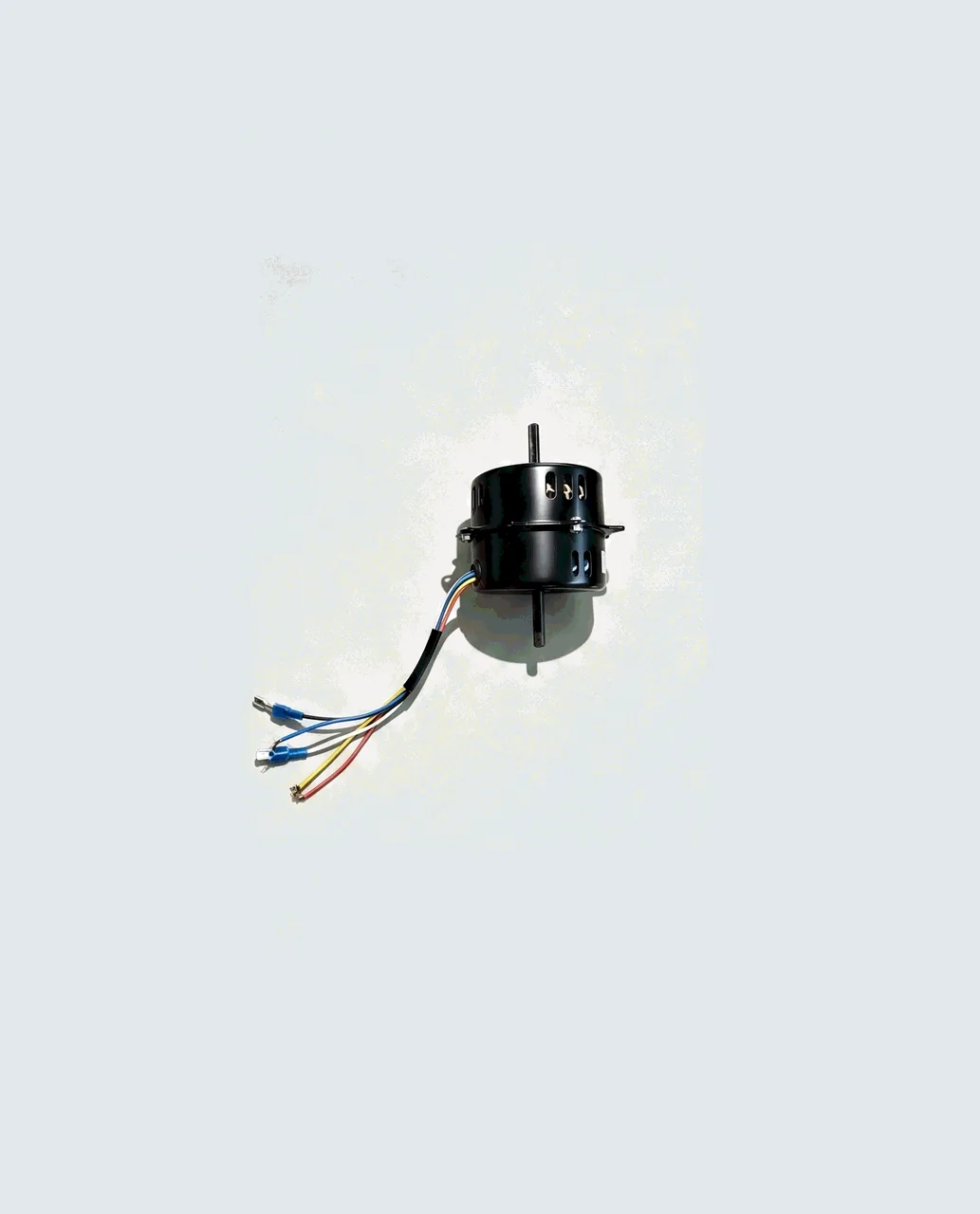
YDK-100-4 Drawn-Shell Platform
Ventilated drawn-shell housing with custom double-shaft geometry and speed-tap harness for commercial entrance air curtains.
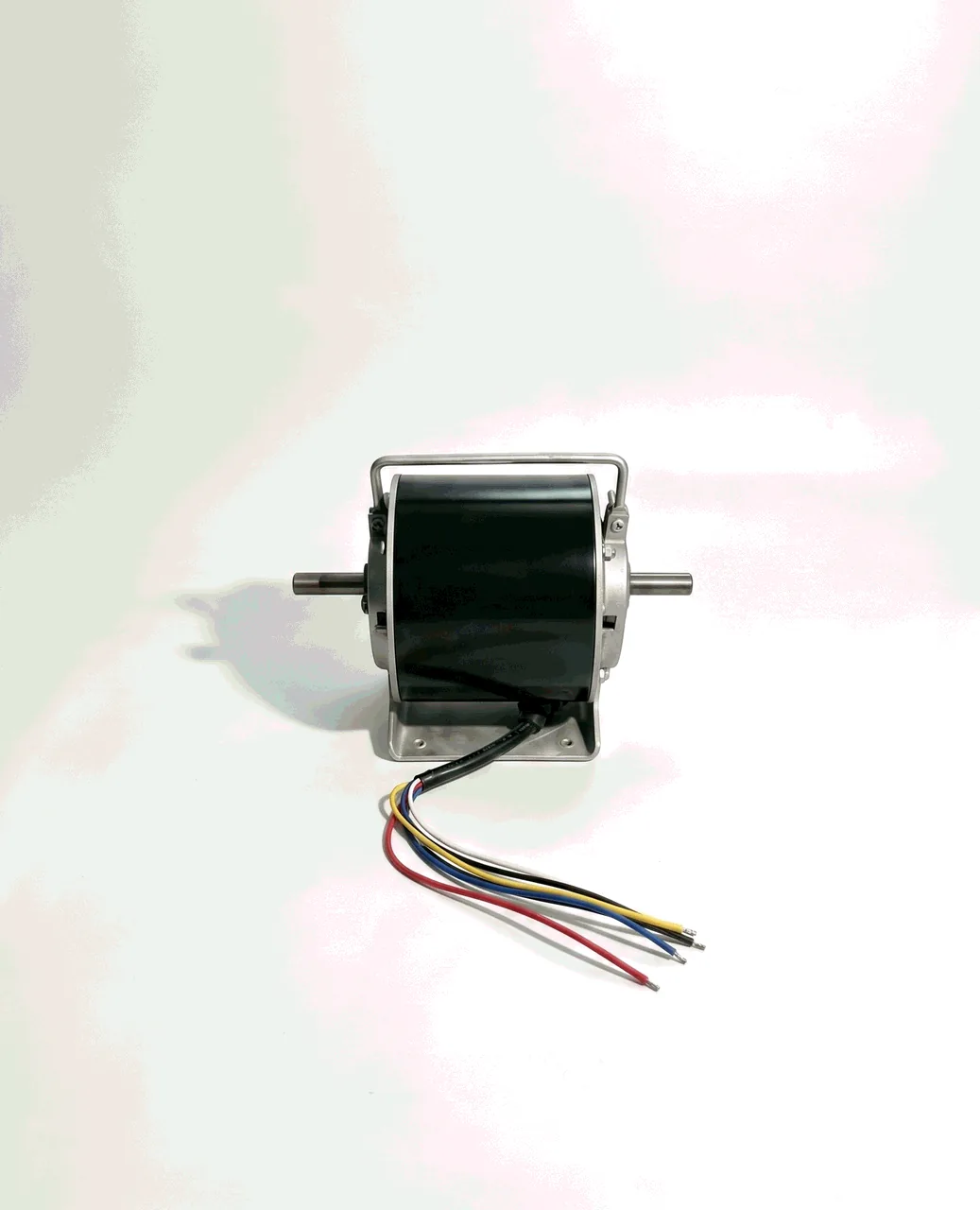
YDK-220-4-L Flexible Casing Connection
Cradle-mounted structure engineered for isolated casing alignment in higher-airflow commercial and industrial doorway units.
Certification Scope & Factory Quality Verification
Before finalizing motor specs for export air curtains, procurement and compliance teams should confirm exact mark boundaries upfront so UL/ETL end-equipment testing never stalls at customs or inspection:
- North American Component Recognition Scope: Intertek cETLus component recognition (Control No. 5020003, Report 21010961HKG-001, tested to UL 1004-1, UL 1004-3, and CSA C22.2 No. 100) applies specifically to models
X9674-115.2,X9674-115.2-AL,X1441-115.2, andX1441-115.2-ALmanufactured by our affiliated factory, Zhongshan Thunder Motor Co., Ltd. It does not automatically cover customYDK-100-4,YDK-100-2, orYDK-220-4-Lair curtain builds; required market marks and testing plans are verified during engineering review. - Hazardous Location Boundaries: MYSUN POWER does not currently hold ATEX or IECEx explosion-proof certificates. Standard air curtain platforms are intended for commercial, retail, cold-chain, and general industrial doorways rather than classified explosive zones.
- Manufacturing Scale & 100% Testing: Backed by motor engineering experience since 2010, an ISO 9001 certified quality management system, and an approximate annual manufacturing capacity of 600,000 motor units, MYSUN POWER performs 100% dynamometer testing on samples and prototypes plus 100% Hi-Pot dielectric withstand testing on production motors.
- Proposal, Prototype & MOQ Timelines: Initial engineering proposals and drawings take approximately 14 days when common materials apply (or approximately 30 days when non-standard tooling or materials are required), followed by 3–5 prototype units for bench airflow and thermal validation before MOQ 300-unit serial production.
For teams also evaluating multi-speed DC airflow options or full custom workflow milestones, see our From RFQ to Prototype: OEM Motor Customization Guide and Motor Quality Assurance & Testing Reference.
What to Send for an Air Curtain Motor Engineering Review
To receive a matched drawing and pricing proposal without back-and-forth delays, include these six baseline items in your inquiry:
- Unit Width & Target Air Velocity: Door width, blower wheel diameter/length, and target outlet velocity or airflow.
- Electrical Supply & Speed Control: Rated voltage, 50 Hz or 60 Hz frequency, number of speed taps, and switching method.
- Current Motor Nameplate or Photo: If replacing or second-sourcing an existing air curtain motor, share nameplate ratings and wiring colors.
- Shaft & Mounting Prints: 2D PDF or 3D STEP geometry showing shaft extensions, flats, mounting bolt centers, and maximum outer envelope.
- Environment & Target Certifications: Unheated vs. heated air curtain plenum, cold-room moisture, and destination market safety marks.
- Estimated Annual Quantity: Pilot sample count (3–5 units) and projected annual production volume (MOQ starts from 300 units).
Request an Air Curtain Motor Spec Review & Prototype Quote
Send your shaft drawing, target speed/voltage, and blower housing boundary directly to MYSUN POWER application engineers:
Request an Air Curtain Motor Quote →
Already have CAD or motor mounting dimensions? Upload Mechanical Drawings for Review → or explore all three Air Curtain Motor Platforms (YDK-100-4, YDK-100-2, YDK-220-4-L) →.
Ready to Optimize Your Motor Performance & Lower TCO?
Guangdong MYSUN Power Technology Co., Ltd. delivers customized BLDC, AC, and high-torque geared motor solutions tailored to your thermal, mechanical, and efficiency specs. Engineering proposals in 14–30 days; prototype batches (3–5 units) and production timelines confirmed following engineering review.